
Dangerous goods, as defined in the National Standard GB6944-86 "Classification and Name Number of Dangerous Goods", are dangerous goods that are explosive, flammable, poisonous, corrosive and radioactive in nature and are liable to cause personal casualties and property damage during transportation, handling and storage and storage. Dangerous goods are generally industrial raw materials or products, because of their special physical and chemical properties, it is easy to cause combustion, explosion, poisoning and other disasters in production, storage and transportation. In order to avoid accidents, the regulations concerning the management of dangerous goods must be strictly observed.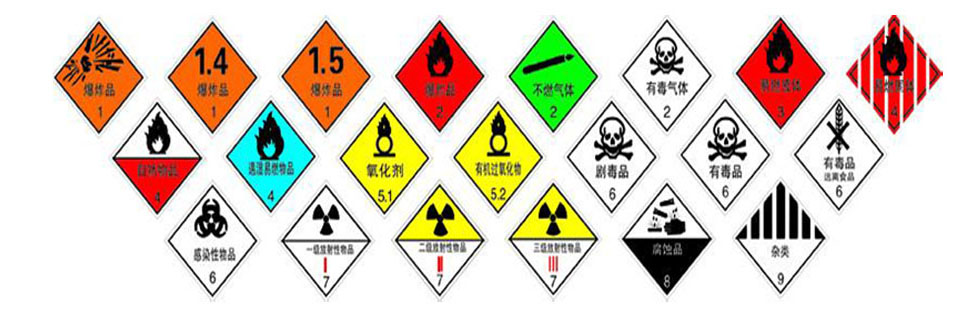
1. Dangerous goods fall into nine categories:
One is explosive; the other is compressed gas; the third is flammable liquid; the fourth is flammable solid; the fifth is oxidant and peroxide; the sixth is toxic; the seventh is radioactive; the eighth is corrosive; the ninth is miscellaneous and marine pollutants.
II. Major Routes
1) The Yangtze River Basin, Shanghai and Guangdong;
2) The Yangtze River Basin, Shanghai and Shandong;
3) The Yangtze River Basin and Shanghai to and from Beijing, Tianjin and Hebei;
4) Shanghai, Taicang and Zhangjiagang to and from Chongqing.
Notices for Declaration of Dangerous Goods in Maritime Transportation
Categories A, 1-4 dangerous goods are generally not received.
B. Category 4 dangerous goods are spontaneous combustion articles such as sulfur dioxide. This kind of dangerous goods is strictly prohibited in summer and should be transported in winter.
Category C, 5-8 dangerous goods are acceptable.
D. Category 7 dangerous radioactive elements are not accepted.
Class E, 5-6 dangerous goods are toxic substances.
Category 8 dangerous goods belong to corrosive goods.
When receiving dangerous goods after class H and 5.1, it is necessary to ask clearly what categories the goods belong to, the UN code, packaging and performance.
I. The freight rate of dangerous goods is higher than that of ordinary goods. Semi-dangerous goods belong to 5, 6 and 8 categories, such as citric acid, chemical products. Usually one cabinet earns USD100-200. The freight rate of semi-dangerous goods is usually: ordinary goods freight rate * 1.3.
J. Log packaged goods belong to 8 kinds of dangerous goods. If they are to be transported to Europe and America, they need to be fumigated for two to three days at the port of departure. In summer, fumigation for two days and ventilation for half a day. In winter, fumigation lasts for two days and ventilation lasts for one day. Therefore, when packing logs, procedures must be arranged 4 to 5 days in advance.
K. Dangerous goods must be declared and then filled in the disaster prevention and treatment form. Hazardous Goods Disaster Prevention and Treatment Form is filled out by the shipper, stamped with the shipper's official seal, and filled in according to the requirements of the form. Disaster prevention and treatment: Fill in items including matters needing attention: what kind of objects should be avoided with the goods, what kind of reactions or disasters are likely to occur.
L. Disaster prevention equipment: How to prevent the spread of disasters in case of disasters, such as what kind of fire extinguishing equipment should be prepared for fire, fire extinguishers or sand, water and other fire extinguishing equipment. Medical treatment: If the ambulance personnel are contaminated with such dangerous goods, whether to use water flushing, which chemical should be diluted, etc.
IV. Operating procedures and matters needing attention
1, inquiry
Shipper is required to provide "Chemical Safety Technical Instructions" (MSDS) to confirm the shipping price.
2. Booking space.
Before booking, we need to fax three documents to our company:
1) Letter of Attorney for Maritime Transport.
2) Report of Identification Result of Cargo Transport Packaging.
3) Chemical Safety Technical Instructions (MSDS).
Note 1: Chinese and English names, chemical formula, box type, dangerous goods grade (CLASS NO.), United Nations dangerous goods code (UN NO.), packing of goods and special requirements are indicated on the shipping proxy to facilitate the application for shipping space and declaration of dangerous goods.
NOTE 2:a. Non-dangerous goods: The Institute of Chemical Engineering (Certificate of Conditions of Cargo Transportation) determines them to be non-dangerous goods.
B. Dangerous Goods: The Institute of Chemical Engineering conducts the certificate of goods transportation conditions.
Note 3: If transshipment is involved, it is necessary to confirm to the shipping company whether there are restrictions on the transshipment port.
3. Installation of Dangerous Goods
1) Please let the driver hand over the specific list of goods to the warehouse along with the goods. (It is convenient for the warehouse to unload the goods and to inspect the goods as well.)
2) If there are special requirements for packing, please inform us in advance. Our company will send the packing photos to your company.
3) Please let the factory fully display the name on the cargo mark (HS code, name, mark, actual customs declaration quantity).
 Hi! Webcome to Shenzhen Herun Human Resources co, Ltd's Website!

 Container transport